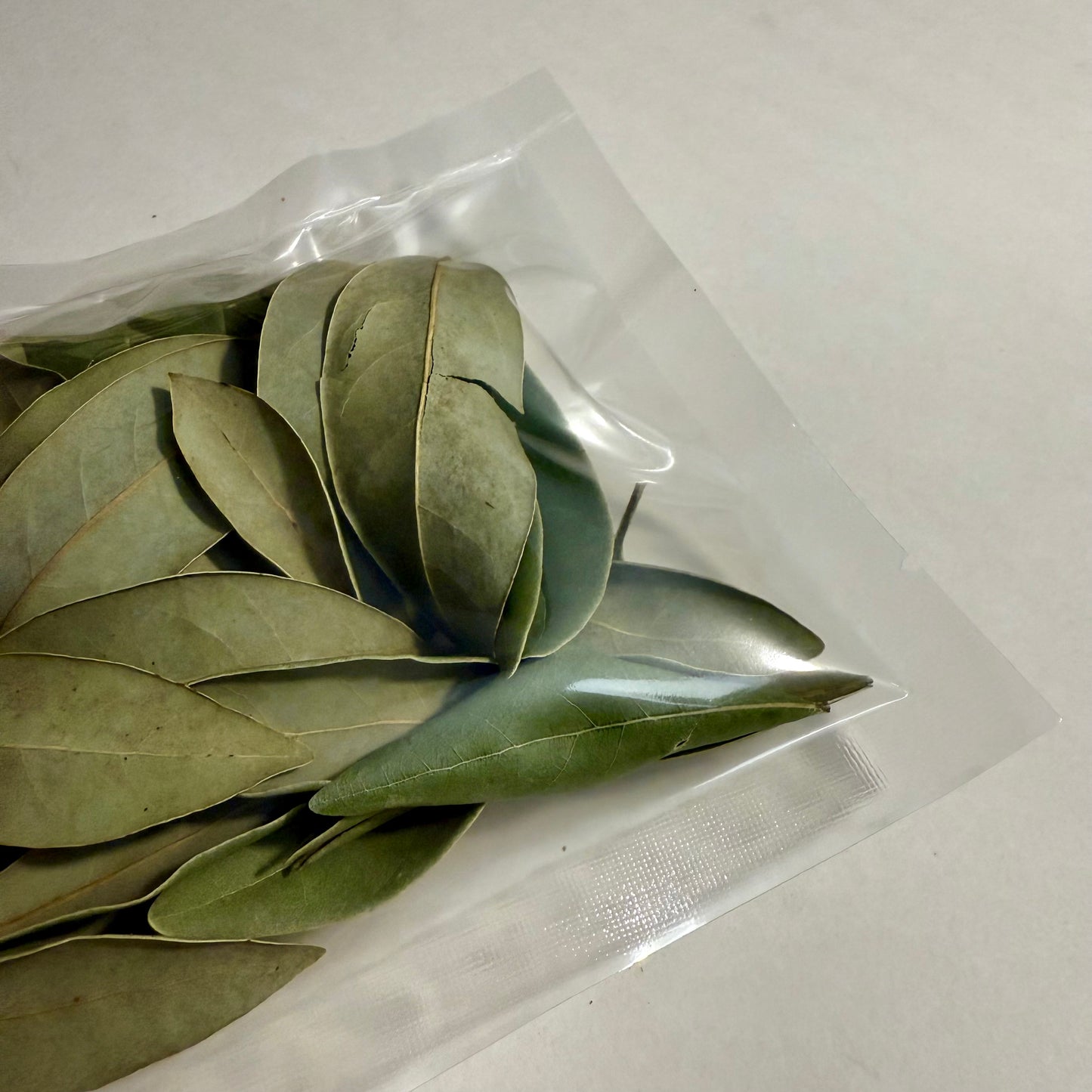
Red bay is a native evergreen tree of Florida’s wetlands and coastal forests, closely related to the avocado. Its glossy green leaves release a spicy, cinnamon-like fragrance when crushed, making the tree easy to recognize even from a distance. For centuries, red bay has been valued for its aromatic leaves, durable wood, and ecological importance in southern forests. Today it is increasingly rare due to a devastating fungal disease, making every remaining tree a living piece of Florida’s natural heritage.
• Shiny, leathery evergreen leaves
• Strong spicy, bay-like fragrance when crushed
• Smooth gray bark and reddish-brown inner wood
• Small dark blue berries in late summer
• Grows as a medium-sized understory tree
Red bay leaves were traditionally used much like culinary bay leaves to flavor soups, stews, and seafood dishes. The wood was prized for boatbuilding, cabinetry, and tools because of its strength and resistance to rot. Indigenous peoples and early settlers also used red bay in herbal preparations and ceremonial practices.
Red bay plays a critical role in Florida’s ecosystems. Its berries feed birds, deer, and small mammals, while its leaves serve as the primary host plant for the beautiful palamedes swallowtail butterfly. As red bay trees decline from disease, entire food webs are affected.
In Florida’s old maritime hammocks, you can still find red bay standing quietly among live oaks and cabbage palms. Crush a leaf between your fingers and you’ll smell a warm, spicy scent that feels like the memory of the forest itself — a reminder of what once covered much of this land.