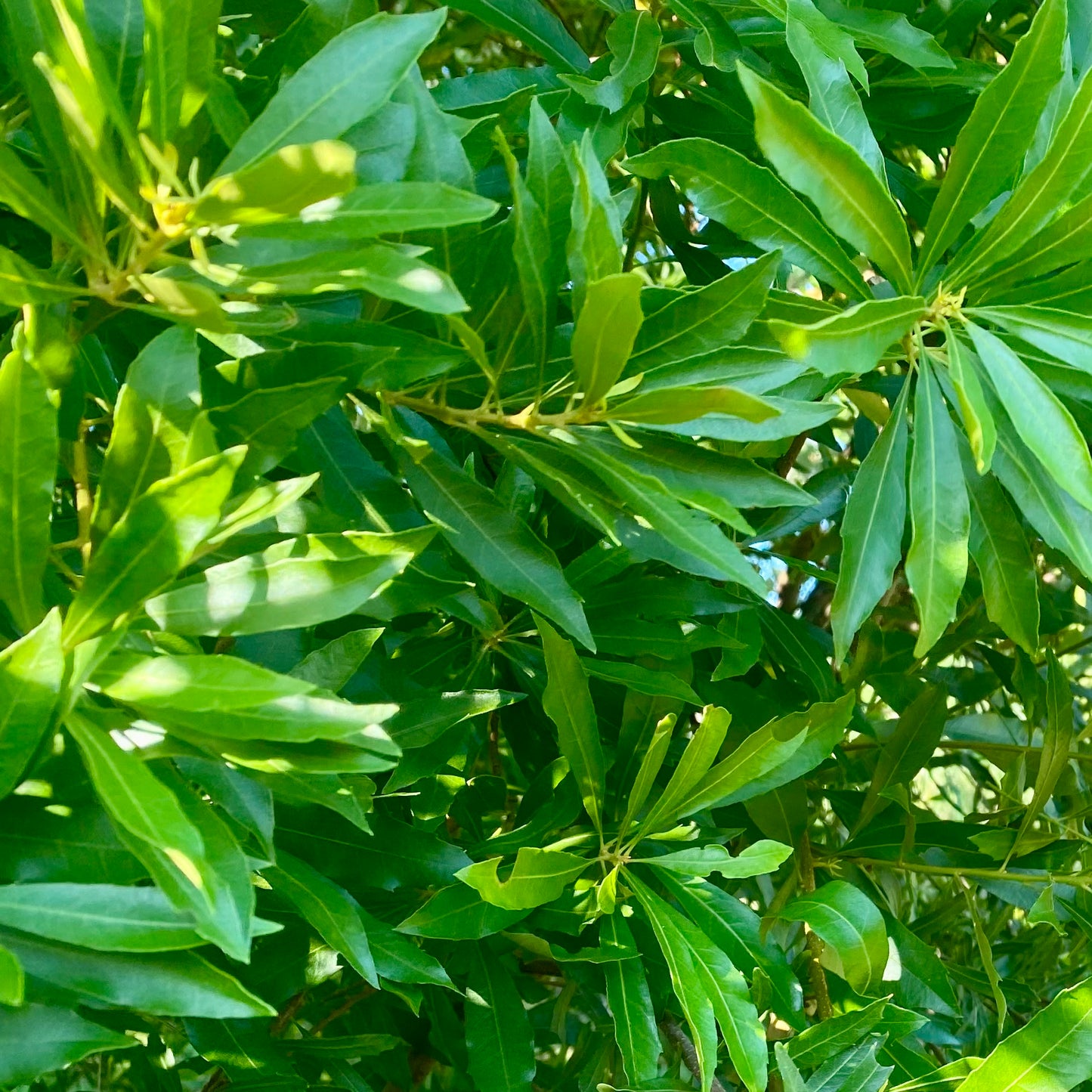
Wax myrtle is a fast-growing evergreen shrub native to the southeastern United States. It forms dense, wind-shaped thickets along Florida’s coasts and wetlands, protecting inland forests from salt spray and storms. When the leaves are crushed, they release a sharp, spicy aroma that has made the plant valuable in herbal traditions for centuries.
• Light olive-green, aromatic leaves
• Pale gray wax-coated berries on female plants
• Multi-trunked, rounded to vase-shaped growth
• Nitrogen-fixing roots that enrich sandy soils
The waxy berries were traditionally boiled to make fragrant bayberry candles. The root bark and leaves were used in herbal medicine for digestion, circulation, and respiratory support. Leaves were also used as a natural insect repellent and aromatic cleanser.
Wax myrtle provides critical winter food for birds such as tree swallows, yellow-rumped warblers, and northern bobwhite. Its dense growth offers shelter for coastal wildlife, and its nitrogen-fixing roots help stabilize and enrich fragile dune and wetland soils.
Along Florida’s dunes, swamps, and wet flatwoods - wax myrtle is one of the quiet guardians. You can smell it before you see it, especially on warm days when the leaves release their spicy resin into the air. It’s one of the plants that makes Florida smell like Florida.