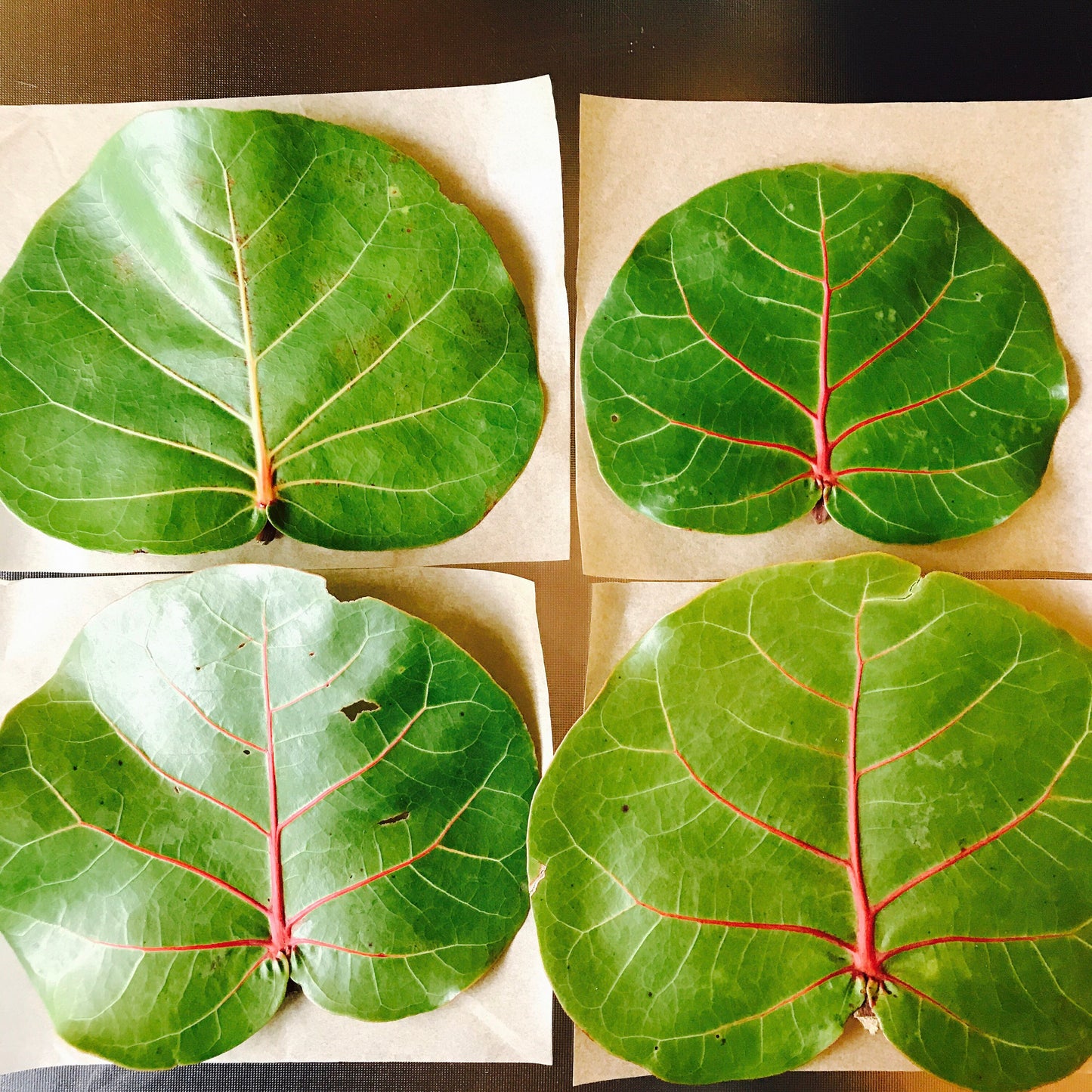
Sea grape is a distinctive coastal plant recognized by its large, round leaves traced with red veins. Growing as a shrub or small tree along Florida’s beaches, it plays a vital role in stabilizing dunes and protecting inland habitats from salt spray and erosion. In late summer, clusters of grape-like fruits appear, giving the plant its common name and providing food for wildlife and people alike.
Key characteristics
• Large, leathery, round leaves with red midribs
• Thick, salt-tolerant evergreen to semi-evergreen foliage
• Grape-like clusters of green to purple fruits
• Smooth gray bark and spreading growth habit
• Deep root system that stabilizes dunes
Human uses
Sea grape fruits have long been used to make jams, jellies, syrups, and wines. The leaves were traditionally used as natural plates and wrappers for food, especially in tropical coastal cultures. Today, sea grape is valued for coastal landscaping, eco-printing, decorative uses, and natural craft applications.
Wildlife & ecology
Sea grape is a cornerstone species of Florida’s coastal ecosystems. Its fruits feed birds and mammals, while its dense canopy provides shelter from heat and storms. By anchoring dunes with its extensive root system, sea grape helps protect beaches from erosion and storm surge.
On hot afternoons, sea grape leaves catch the ocean breeze like green sails. Their broad shade and quiet rustling are part of the rhythm of Florida’s shoreline — a reminder that the coast is both fragile and resilient.
Fruits ripen late summer through fall; leaves often redden in dry or salty conditions
Wild Island Trading Co
12 Fresh Sea Grape Leaves — Harvested to Order from Florida’s Coast