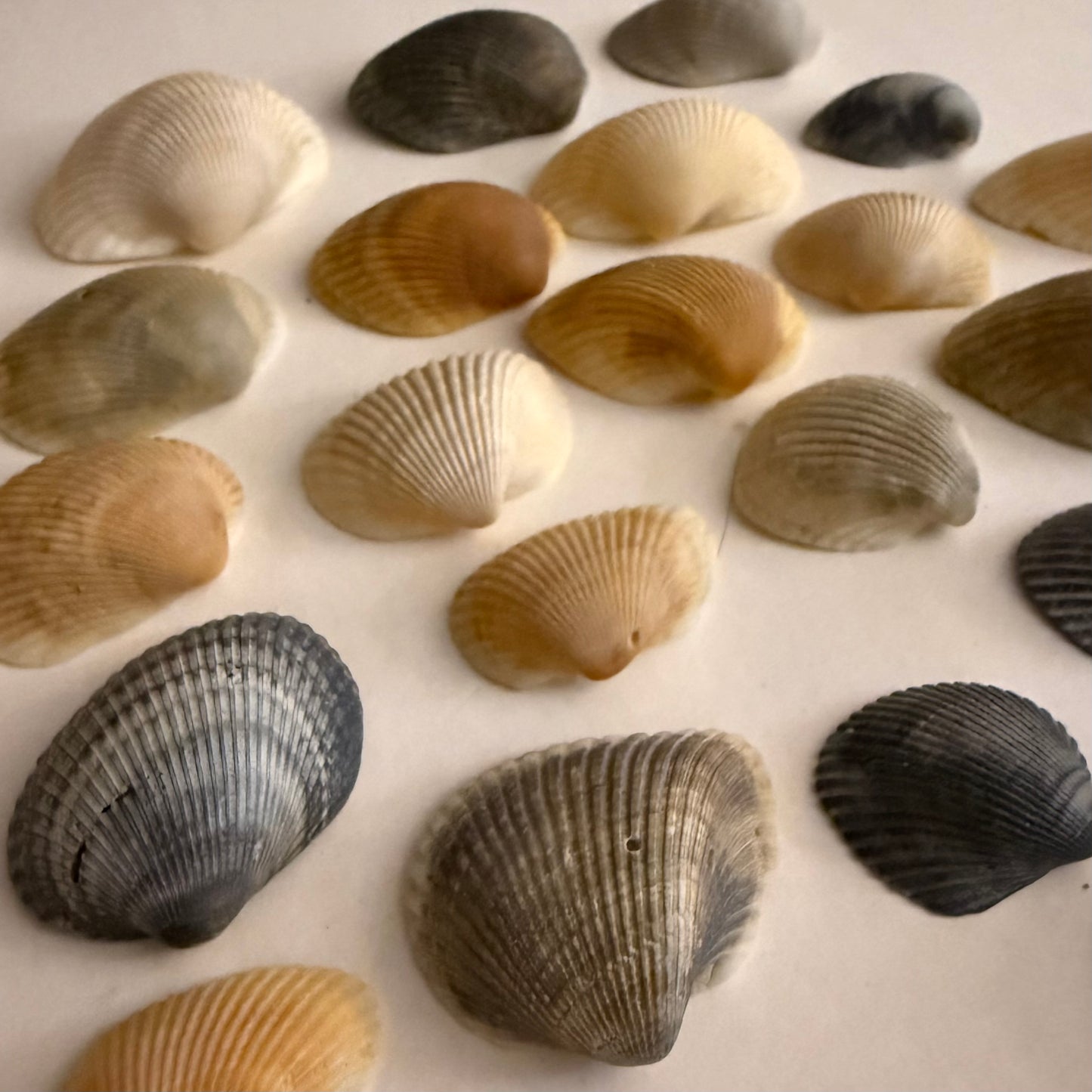
Ark shells are thick, heavy bivalve shells belonging to the ancient mollusk family Arcidae. They are named for their distinctive hinge, which resembles the planks of an old wooden ark. Found along Florida’s coasts in shallow waters and tidal flats, ark shells have survived nearly unchanged for more than 100 million years, making them living relics of Earth’s prehistoric seas. Their bold ribbed textures and heart-like shape make them one of the most striking shells to wash ashore after storms
• Heavy, strongly ribbed shells with deep grooves
• Rounded to heart-shaped form
• Straight, toothed hinge resembling a zipper
• Colors range from creamy white to tan, gray, and reddish-brown
• Durable shell structure that resists wave action and predators
Ark shells have been used throughout history for decoration, jewelry, tools, and ceremonial objects. Indigenous coastal cultures used their thick shells as cutting edges and scrapers, while later settlers collected them for buttons, ornaments, and keepsakes. Today they are prized for coastal decor, shell crafts, teaching collections, and natural history displays.
Living ark shells bury themselves in sand or mud and filter microscopic plankton from the surrounding water. In doing so, they help clean and clarify coastal ecosystems. Their shells provide habitat for small marine organisms after death, and their presence is an indicator of healthy, well-oxygenated coastal waters.
After strong winds and shifting tides, ark shells often appear along Florida’s beaches like small treasures from another age. Holding one feels like touching something ancient — a reminder that long before people walked these shores, creatures just like this were already thriving in the sea.